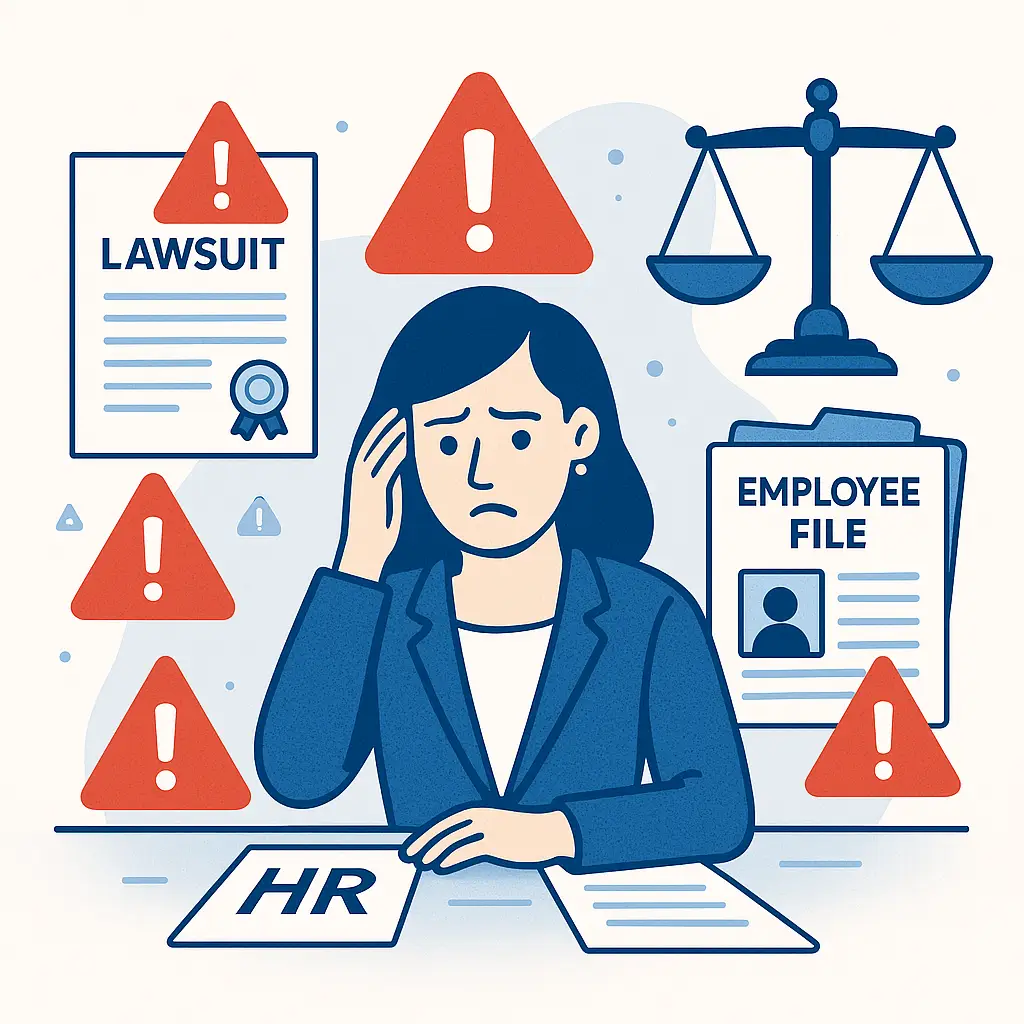
Top 10 HR Mistakes That Can Lead to Legal Trouble in India (And How to Avoid Them)
Top 10 HR Mistakes That Can Lead to Legal Trouble in India
In India’s evolving regulatory environment, HR is no longer just an administrative function—it is a critical compliance and risk management role.
Many organizations unknowingly make HR mistakes that can lead to serious legal consequences, including penalties, employee disputes, and reputational damage.
Understanding these common pitfalls can help organizations build stronger, compliant, and legally sound HR practices.
Here are the top 10 HR mistakes that can lead to legal trouble in India—and how to avoid them.
1. Not Issuing Proper Appointment Letters
One of the most common mistakes is employing staff without issuing a formal appointment letter.
Without a clear employment contract:
- Roles and responsibilities are undefined
- Terms of employment are unclear
- Legal disputes become difficult to defend
How to avoid:
Always issue a detailed appointment letter covering salary, role, policies, and termination terms.
2. Non-Compliance with Labour Laws
Ignoring statutory requirements such as:
- PF (Provident Fund)
- ESIC
- Minimum Wages
- Gratuity
can lead to penalties and legal action.
How to avoid:
Regularly audit compliance and stay updated with labour law changes.
3. Improper Handling of Termination
Terminating employees without:
- Proper notice
- Documentation
- Valid reason
can lead to wrongful termination claims.
How to avoid:
Follow due process, maintain records, and ensure termination aligns with company policy and labour laws.
4. Lack of Clear HR Policies
Companies without structured policies often face:
- Inconsistent decisions
- Employee disputes
- Legal ambiguity
How to avoid:
Develop clear policies such as:
- Code of Conduct
- Leave Policy
- Disciplinary Policy
- POSH Policy
5. Ignoring Workplace Harassment Complaints
Failure to address harassment complaints—especially under POSH—can lead to serious legal consequences.
How to avoid:
- Establish an Internal Committee (IC)
- Conduct proper inquiries
- Ensure timely action
6. Poor Documentation Practices
Many companies fail to maintain proper records such as:
- Warning letters
- Performance reviews
- Disciplinary actions
This weakens the company’s position in legal disputes.
How to avoid:
Maintain detailed and structured documentation for all HR actions.
7. Misclassification of Employees
Incorrectly classifying employees as:
- Contractors
- Consultants
to avoid compliance can result in penalties.
How to avoid:
Ensure proper classification based on actual working relationships.
8. Not Following Due Process in Disciplinary Actions
Taking action without:
- Investigation
- Employee explanation
- Fair hearing
can be legally challenged.
How to avoid:
Follow principles of natural justice:
- Issue notice
- Allow response
- Conduct fair inquiry
9. Non-Payment or Delayed Payment of Wages
Delays in salary or non-payment can result in:
- Legal complaints
- Employee dissatisfaction
- Regulatory action
How to avoid:
Ensure timely and accurate salary payments as per law.
10. Lack of Grievance Redressal Mechanism
Employees without a proper grievance channel may:
- Escalate externally
- File legal complaints
How to avoid:
Implement a structured grievance handling system and address concerns proactively.
Conclusion
HR plays a crucial role in protecting organizations from legal risks. Most legal issues arise not from intentional violations, but from lack of awareness, poor processes, or inadequate documentation.
By avoiding these common HR mistakes, organizations can:
- Ensure compliance
- Reduce legal exposure
- Build a fair and structured workplace
A proactive HR approach is not just beneficial—it is essential for long-term organizational stability.
Leave a Reply