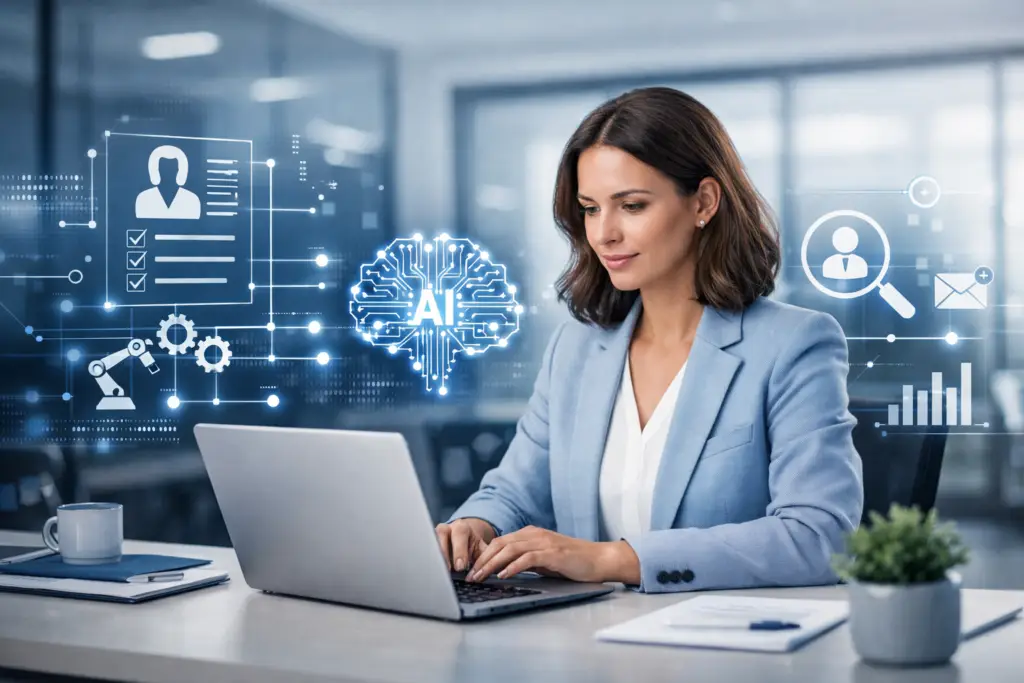
How AI Is Transforming HR in Today’s Workplace (Without Replacing the Human Touch)
How AI Helps HR in the Current Era
A few years ago, if someone said AI would become a part of HR, most people would have assumed it’s limited to large tech companies or futuristic systems.
Today, that’s no longer the case.
AI is quietly becoming part of everyday HR work—not as a replacement for HR professionals, but as a tool that helps them work smarter, faster, and more consistently.
The real question is not “Will AI replace HR?”
It’s “How can HR use AI effectively without losing the human element?”
The Reality: HR Work Has Changed
If you look at a typical HR day, a lot of time goes into:
- Drafting emails and letters
- Screening resumes
- Answering repetitive employee queries
- Maintaining records
- Creating policies and documentation
These tasks are necessary—but they are also time-consuming.
This is where AI is making a noticeable difference.
1. Faster and More Structured Documentation
One of the biggest advantages of AI in HR is how it helps with documentation.
Whether it’s:
- Offer letters
- Warning letters
- HR policies
- Job descriptions
AI can help create a first draft quickly, which HR can then review and customize.
This does not remove HR’s role—it actually strengthens it.
Instead of spending time starting from scratch, HR can focus on accuracy, compliance, and context.
2. Smarter Recruitment Support
Recruitment is one area where AI is already being widely used.
AI tools can:
- Screen resumes based on keywords
- Identify relevant candidates faster
- Help draft job descriptions
- Automate initial communication
However, hiring decisions still require human judgment.
AI can shortlist—but it cannot assess:
- Cultural fit
- Attitude
- Real intent of the candidate
That remains an HR responsibility.
3. Improving Employee Experience
Employees today expect quick responses.
Questions like:
- “How many leave days do I have?”
- “What is the policy for reimbursement?”
- “When will salary be credited?”
AI-powered chat systems can handle these repetitive queries instantly.
This reduces dependency on HR for basic questions and allows HR to focus on more meaningful interactions.
4. Supporting HR in Policy Creation
Creating HR policies requires:
- Legal awareness
- Clarity
- Consistency
AI can assist by:
- Structuring policy drafts
- Suggesting standard formats
- Highlighting missing sections
But the final responsibility still lies with HR to ensure:
- Compliance with Indian labour laws
- Alignment with company culture
5. Data-Driven Insights for Better Decisions
HR decisions are often based on experience—but data is becoming equally important.
AI can help analyze:
- Attrition trends
- Hiring patterns
- Employee feedback
This allows HR to:
- Identify problems early
- Make informed decisions
- Plan better strategies
6. Reducing Manual Errors
Manual HR processes often lead to:
- Calculation errors
- Documentation gaps
- Missed compliance steps
AI can help standardize processes and reduce such errors, especially in areas like:
- Payroll inputs
- Compliance tracking
- Record maintenance
7. Helping Small Organizations Build HR Systems
This is where AI is especially useful.
Many small and mid-sized companies do not have:
- Dedicated HR teams
- HR software systems
- Legal support
AI tools can help them:
- Create basic HR policies
- Draft employee documents
- Understand compliance requirements
This makes HR more accessible, even without large budgets.
Where AI Falls Short (And Always Will)
Despite all these benefits, there are clear limitations.
AI cannot:
- Handle sensitive employee conversations
- Mediate conflicts effectively
- Understand emotions and intent
- Build trust with employees
HR is, at its core, about people.
And people cannot be managed purely through automation.
The Real Role of HR in the AI Era
AI is not here to replace HR—it is here to support HR.
The role of HR is actually becoming more important, not less.
Because now HR professionals are expected to:
- Interpret AI-generated insights
- Ensure fairness and compliance
- Maintain human connection
- Make ethical decisions
In simple terms:
👉 AI handles the process
👉 HR handles the people
Conclusion
AI is changing how HR works—but it is not changing why HR exists.
Organizations that use AI effectively will benefit from:
- Faster processes
- Better documentation
- Improved efficiency
But the real strength of HR will always lie in:
- Understanding people
- Building trust
- Making fair decisions
The future of HR is not AI-driven or human-driven—it is a balance of both.
About HR Policy Hub
At HR Policy Hub, we focus on practical HR insights that help organizations build structured, compliant, and people-centric workplaces.
From labour law guidance to real-world HR scenarios, our goal is to make HR simpler and more effective for everyone.
Explore more at:
👉 https://hrpolicyhub.in/
Leave a Reply